Key Features
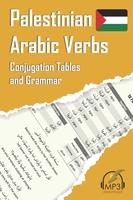
This is a complete Palestinian Colloquial Arabic verb reference built around patterns rather than memorization.
This eBook teaches you how to conjugate Palestinian Arabic verbs by recognizing patterns that apply across the language. More than 100 model tables serve as templates for over 750 commonly used verbs, helping you move beyond isolated forms toward confident and flexible production. Phonemic transcription and native-speaker audio support accurate pronunciation, even if you are still learning the Arabic script.
What’s inside
- Over 100 model conjugation tables.
- Patterns that allow conjugation of more than 750 common verbs.
- Full coverage of perfect, imperfect, and bi-imperfect tenses.
- Example sentences for every verb showing real usage.
- Phonemic transcription indicating stress and sound changes.
- Dedicated sections on pseudo-verbs and compound tenses.
- Grammar explanations for participles, negation, and usage.
- Indexes by table pattern, Arabic to English, and English to Arabic.
Who it’s for: Learners of Palestinian Colloquial Arabic at any level, including those relying on transcription rather than Arabic script.
Audio: Audio for all content is available to download or stream below, recorded by a native speaker from Gaza.
Use this eBook as a long-term reference to build fluent and accurate verb usage in spoken Palestinian Arabic.
Detailed Overview
When you start learning Palestinian Arabic, you quickly realize that verbs are the heartbeat of the dialect, but they are also the most challenging part to master. Because Palestinian Arabic—and specifically the Gazan variety featured here—is a spoken language without official spelling rules, the standard Arabic script can be misleading. It often hides the actual pronunciation, word stress, and the melodic "flow" that makes a speaker sound natural.
This book is designed to bridge that gap. By using phonemic transcriptions alongside the Arabic text, it solves the problem of "guessing" how a word sounds. You aren't just memorizing letters; you are learning the specific phonetic shifts and stresses provided by a native speaker from Gaza.
The Power of Patterns
The secret to making progress efficiently isn't memorizing 750 individual verbs one by one. Instead, this book teaches you to see the "blueprints" behind the language. Most verbs in Palestinian Arabic follow predictable patterns called "measures" and "qualities."
Once you understand how a specific pattern works—for example, a "Sound Measure I" verb—you’ve unlocked the ability to conjugate dozens of other verbs that share that same structure. It’s a way of working smarter, not harder, allowing you to expand your vocabulary exponentially without the mental burnout of rote memorization.
How to Use This in Your Daily Study
In a typical study session, you’ll treat this book as a practical workshop. If you want to say "they swim," you simply look up the verb in the index. You’ll find it’s grouped under a specific pattern, like 1s1. Even if "swim" doesn't have its own dedicated table, the book directs you to a "model" verb that does, like the verb for "pay" (Table 45).
From there, it’s a simple game of substitution: you take the consonants for "swim" and plug them into the framework of the "pay" table. To ensure you’ve got it right, you can listen to the accompanying audio tracks to hear the exact Gazan pronunciation. You’ll see exactly how the verb behaves in the perfect, imperfect, and imperative forms, as well as the active participle.
Moving Toward Natural Fluency
By using the example sentences included with every table, you will see how these verbs actually live in conversation. You’ll learn how to negate them naturally and how to build "compound tenses" to express complex ideas—like things you "used to do" or "were going to do."
What you’ll achieve is a high level of accuracy and authenticity. Instead of sounding like you’re reading from a textbook, you’ll begin to use the language with the confidence and nuance of a real speaker, mastered through a system that makes the complex logic of Gazan Arabic verbs finally feel intuitive.
PDF Sample
Take a closer look inside!
Not sure if this book is right for you? Download a free sample for an extended preview and try out the materials before you decide to buy. See how the PDF eBook looks on your screen and how it prints out.
Audio Stream
Stream on YouTube
Audio Download
MP3 Files
Download the full accompanying audio for this product as MP3 files—completely free! The files are provided in a compressed ZIP folder for easy access. Simply download, extract the files, and start listening. No purchase of the PDF eBook is required!
Paperback?
This book is also available in paperback!
On Lingualism.com, this book is sold as a PDF eBook only. A paperback edition is also available via IngramSpark* for US and UK addresses, and through Amazon worldwide. You may also ask your local bookstore or library to special order a copy.
* If the IngramSpark link is not appearing below, please check back soon. We're currently adding them in.
Customer Reviews
I'm so greateful for this book. It is just the right size. Easy to look up verbs. Clear font. Helpful transliterations, especially because they indicate, when necessary, which syllable is accented when pronouncing the conjugated form of the verb. I'm (very) slowly able to read the practice sentences - which not only provide context for the verbs, but also reinforce other important vocabulary. The verb index at the back of the book, which lists the patterns of 750 verbs based on the paradigms in the book, are still to advanced for me to use, but I like knowing that once I have practiced one particular form of verb, I can look up others with a similar pattern.
My only recommendation for a future version of the book is that you consider adding the pronouns in Arabic script, and not just in transliteration. And that you consider adding them on both sides of each page, so that it is easier to see when practicing different tenses.
This is exactly what I was looking for to practice Arabic verbs - and the fact that it focuses specifically on the Palestinian dialect is amazing! Thank you!
Before this wonderful ? book came into existence in c.2021
I attracted this book through the law of attraction and I'm glad it did ?
Absolutely love the tone of voice that Mr. Younis uses that being from the Gaza Strip with deep roots that hail from Galilee (northern Palestine ??) especially when he uses the suffix"ku كو" instead of kom "كم" which both are interchangeable
Glad إنها اختي شرتلي هالكتاب السنة الماضية و لساتني عم بستخدمو بشكل يومي و عم بتعاملو بشكل ديني كمان متل ما نحكي that my sister bought this book ? for me last year and I'm still using it daily and treating it religiously as we speak
<100% ?
Thx a lot. I also enjoyed it. It's been being really helpful to me as I always had wondered where the sight differences between Northern and Southern Levantine dialect appeared. I highly recommend the Levantine Arabic verbs for that reason.
I'm SO glad that you've come out with this book! I discovered that there are significant differences in verbs and conjugations between the Northern and Southern Levantine dialects--even though many resources treat them as if they're basically the same. So I'm really grateful to finally have a resource that closely matches the Jordanian Arabic that I'm studying. One improvement that could be made would be to add the alternative pronunciations for verbs that contain ق. The speaker on the recordings uses the English "g" sound but many other Arabs ( especially women) omit this sound or treat it like a hamza OR even sometimes pronounce it in its traditional Fusha way for certain words. As a result, it's not very easy to figure out how to navigate this sound in words, so an audio recording would be really beneficial.
Detailed Overview