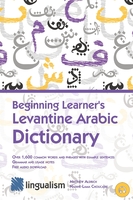
Learning Levantine Arabic can often feel like trying to solve a puzzle where the pieces keep changing shape. Most traditional dictionaries are organized by roots, which means you must identify a wordโs three-letter core before you can even find its definition. This book removes that frustration by using a straightforwardย alphabetical arrangement. If you hear a word likeย ุฃููุฏย (sure) orย ุฅูู
ููย (email), you can look it up exactly as it sounds, allowing you to spend your study time learning rather than decoding dictionary logic.
A Dictionary That Acts as a Mentor
What makes this book special is that it is not just a list of words; it is a guided self-study tool. Instead of burying grammar explanations in a dense appendix, dozens of clear, practical notes appear in gray boxes directly next to relevant entries.
For example, when you look up a verb likeย ุจุงุนย (to sell), a note explains that the form shown in the dictionary is theย third-person masculine singular past tense, which serves as the base form for Arabic verbs. Insights like this turn a simple lookup into a short lesson on how the language actually works, helping you build understanding organically as your vocabulary grows.
Making Progress More Efficient
One of the most common obstacles for learners is the synonym problem, encountering two words with the same English translation and not knowing which one to use. This dictionary addresses that issue by includingย parallel example sentencesย for synonyms, showing clearly when words are interchangeable and when they are not. This removes hesitation and allows you to move forward with confidence.
Because Levantine Arabic is primarily a spoken language with no fixed spelling standard, the dictionary also includesย common variant spellings. This ensures you are not thrown off when the same word appears in different written forms across media, messages, or informal writing.
How to Use This Book in Your Study Sessions
In a practical study session, the example sentences are your main learning tool. Every entry demonstrates how a word interacts with others in real usage. For instance, by studying the verbย ููุจุณุทย (enjoy), you will see that it requires the prepositionย ุจููย (bi-) before its object, as in the sentenceย ููุจุณุท ุจูุงูุญููููุฉย (He enjoyed the party).
Using the free downloadable audio alongside the entries allows you to model pronunciation, rhythm, and word stress directly from native speakers. This is especially important for developing a natural Beiruti accent, which provides an excellent foundation for being understood throughout the Levant.
What You Can Realistically Achieve
Used as a daily companion, this dictionary helps you build a strong foundation in the Arabic spoken in Lebanon and across the northeastern Arab world. You will expand your core vocabulary while also learning to recognize common structural patterns, such as identifying and removing prefixes likeย ุจูย (present tense) orย ุญูย (future marker).
Over time, you move beyond word-for-word translation and begin to understand the internal logic of the language. This shift gives you the confidence to follow conversations, respond naturally, and engage with real-world Levantine Arabic as it is actually spoken.