


 Key Features
 Key Features
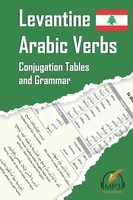
Levantine Arabic Verbs: Conjugation Tables and Grammar is a systematic verb guide for Lebanese and Levantine Colloquial Arabic.
This comprehensive verb reference teaches you how Levantine verbs work as a system. Rather than presenting isolated forms, the book organizes verbs into clearly defined patterns, allowing you to conjugate hundreds of additional verbs listed in the indexes. The Lebanese variety is used as a representative form of Levantine Colloquial Arabic, making the material broadly useful across the Levant.
Each verb is presented with full conjugation tables, phonemic transcription to show pronunciation and stress, and multiple example sentences that illustrate real usage.
What’s inside
- 103 conjugation tables covering common Levantine verb patterns.
- A pattern-based classification system for extending conjugation to new verbs.
- Five essential verb forms: perfect, imperfect, bi-imperfect, imperative, and active participle.
- Arabic script with phonemic transcription for accurate pronunciation.
- Native-speaker example sentences for every verb.
- Grammar explanations covering pronouns, tenses, and verb measures.
- Prepositional phrase tables for frequent verbal constructions.
- Comprehensive indexes organized by pattern and meaning.
Who it’s for: Learners of Levantine Colloquial Arabic who want to move beyond memorization and understand how verbs function across the dialect.
Audio: Audio recordings by a native speaker of each conjugated form and the example sentences are available to download or stream below.
Use this eBook as a core reference for mastering verbs in spoken Levantine Arabic.
 Detailed Overview
 Detailed Overview
 PDF Sample
 PDF Sample
Take a closer look inside!
Not sure if this book is right for you? Download a free sample for an extended preview and try out the materials before you decide to buy. See how the PDF eBook looks on your screen and how it prints out.
 Audio Stream
 Audio Stream
 Audio Download
 Audio Download
MP3 Files
Download the full accompanying audio for this product as MP3 files—completely free! The files are provided in a compressed ZIP folder for easy access. Simply download, extract the files, and start listening. No purchase of the PDF eBook is required!
 Other Formats and Options
 Other Formats and Options
 Paperback?
 Paperback?
This book is also available in paperback!
On Lingualism.com, this book is sold as a PDF eBook only.
A paperback edition is also available via IngramSpark* for US and UK addresses, and through Amazon worldwide. You may also ask your local bookstore or library to special order a copy.
Please note that paperback editions are printed with black-and-white interiors, which differ from the full-color sample images shown for the PDF eBook above.
* If the IngramSpark link is not appearing below, please check back soon. We're currently adding them in.


 Customer Reviews
 You may also be interested in...