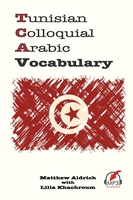
When learning Tunisian Arabic, it is easy to focus on grammar and sentence structure while overlooking one of the biggest obstacles to communication: vocabulary. You can form a correct sentence, but without the right word, the message never quite lands. This book is designed to address that problem directly by focusing on the core building blocks of spoken Tunisian Arabic, the words and expressions used in everyday life.
From Sound to Meaning in Tunisian Arabic
For many learners, spoken Tunisian Arabic can initially sound fast and difficult to segment. This book helps you reach the point where that stream of speech begins to break down into recognizable words and phrases. As your vocabulary grows, context becomes increasingly powerful, allowing you to infer meaning even when you encounter unfamiliar expressions.
The vocabulary is organized into 57 thematic sections, grouping related words and phrases together. This thematic organization supports long-term retention by encouraging meaningful connections between concepts, rather than isolated memorization.
Designed for Active Vocabulary Study
This book is not meant to function like a dictionary that you consult occasionally to look up a single word. It is designed to be studied. Each page presents vocabulary in a three-column format: English translation, phonemic transcription, and Arabic script. This layout encourages active engagement with the material.
By covering one or two columns, you can test yourself in different directions, producing the Tunisian Arabic word from English, recalling pronunciation from the script, or recognizing meaning from sound alone. This active approach helps identify gaps quickly and keeps study sessions focused and efficient.
Authentic Spoken Tunisian Arabic
The vocabulary and expressions in this book reflect how Tunisian Arabic is actually spoken in everyday situations. The emphasis is on natural, conversational language rather than formal or textbook-style usage.
Accompanying audio recordings reinforce this focus on pronunciation and rhythm. Listening while studying allows you to imitate native pitch, stress, and intonation, helping you internalize the sound patterns that define Tunisian Arabic and making the vocabulary usable in real conversations.
Flexible Organization and Easy Navigation
You can work through the 57 thematic sections systematically from beginning to end, or jump between topics depending on your immediate needs. Each section is clearly numbered, making it easy to locate specific vocabulary and the corresponding audio tracks.
An alphabetical English index at the back of the book allows you to quickly find where a word appears, even if it is grouped under a less obvious theme. A dedicated notebook section gives you space to record additional related words you encounter elsewhere, keeping your vocabulary organized by topic.
What You Can Achieve
When used consistently alongside other study materials, this book helps move learners from confusion toward functional communication in Tunisian Arabic. Instead of collecting disconnected words, you build a practical vocabulary for everyday situations, from shopping and transportation to social interaction and personal expression.
The goal is not memorization for its own sake, but reaching a point where Tunisian Arabic begins to feel more accessible. With a strong vocabulary foundation, comprehension improves, confidence grows, and meaningful communication becomes far more natural.