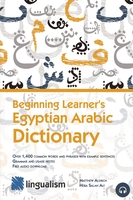
One of the biggest hurdles for anyone beginning Arabic is the traditional dictionary. Most Arabic dictionaries are organized by roots, three-letter consonant clusters that often feel like a secret code you have not learned yet. This book removes that obstacle by using a clear alphabetical arrangement. Words appear exactly where you expect to find them, based on how they are written and pronounced, so you can focus on learning instead of decoding dictionary logic. For example, you can look up أبْيَض ʔábyaɖ (white) or اِتْأخّر itʔáxxar (be late) directly under Alif, rather than trying to track down their abstract root forms.
A Dictionary That Teaches You How to Learn
Beyond simply defining words, this book is built to be a self-study tool. You’ll find dozens of valuable notes on grammar, pronunciation, and usage tucked into gray boxes right next to relevant entries.
For example, when you look up a verb like اِِبْتسم (ibtásam, to smile), a note explains that while it is translated as an infinitive, you are actually looking at the most basic Arabic form, the third-person masculine singular past tense. By scattering these insights throughout the book rather than burying them in a dense appendix, the dictionary encourages a sense of exploration.
You aren't just memorizing definitions. You are observing how the language actually functions.
Making Progress More Efficient
Learners often encounter multiple words with the same English translation and wonder which one is correct. This dictionary addresses that frustration directly by including parallel example sentences for synonyms. Words such as بسكوت (baskūt) and بسكويت (baskawīt), both meaning “cookies,” appear side by side, making it immediately clear that they are interchangeable forms of the same borrowed word.
Because Egyptian Arabic does not follow fixed spelling conventions, the book also includes a Phonemic Transcription Index. This allows you to look up words based on how they sound, which is especially helpful when you hear a new word but are unsure how it should be written in Arabic script.
Using the Book in Your Study Sessions
In a practical study session, this dictionary works best as a tool for observation and pattern recognition. Every entry includes at least one example sentence that shows how the word interacts with others. By studying these examples, you begin to notice recurring structures and usage patterns.
For example, the verb اِتْبسط (itbásaʈ, enjoy) appears with the preposition بِـ (bi-) before its object. This becomes clear when you see the sentence اِتْبسط بِالْحفْلة itbásaʈ bilɧáfla (He enjoyed the party). Details like this are difficult to grasp from translations alone, but they become obvious when seen repeatedly in context.
Phonemic transcription and stress markings are provided throughout the book, and when combined with the accompanying audio, they allow you to model pronunciation, rhythm, and word stress accurately. This helps your spoken Arabic sound more natural and less hesitant.
What You Can Achieve
Used consistently, this dictionary helps you build a strong foundation in the Arabic spoken in Egypt today. You will expand your core vocabulary while also developing an awareness of common patterns, such as how verbs beginning with اِتـ (it-) often signal particular types of actions or states.
By the time you are comfortable using this book, you will not only know what words mean, but also understand how they behave. This structural awareness makes it easier to absorb new vocabulary, follow real conversations, and participate in everyday Egyptian Arabic with growing confidence.